Eswatini Supreme Court Grants Detained Deportees Access to Legal Representation
The highest court in Eswatini has ruled that four detained men who were deported from the United States have the fundamental right to meet with local legal counsel, ending a nine-month legal battle over access to representation.
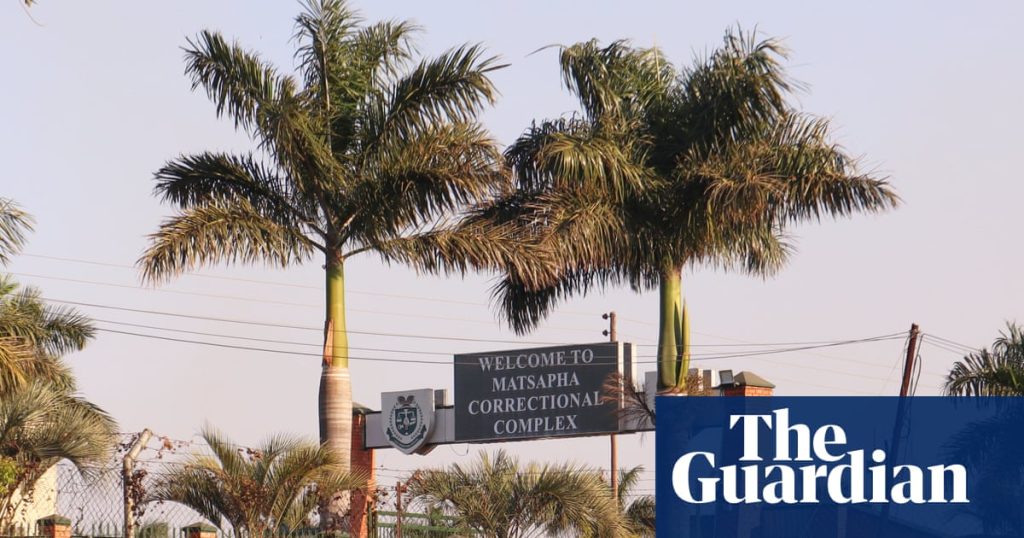
The detainees, originating from Cambodia, Cuba, Vietnam, and Yemen, arrived in the southern African nation in July as part of expanded deportation policies. Despite having no prior connections to Eswatini, formerly called Swaziland, these individuals were transferred to the country and held in a maximum-security correctional facility.
American authorities had characterized the men as dangerous offenders, though their legal representatives maintained that they had already completed sentences for crimes committed on US soil. While prison officials permitted phone consultations with their American attorneys, they consistently refused requests for face-to-face meetings with local legal counsel.
Court Rejects Government Arguments
In Thursday’s landmark judgment, the supreme court dismissed the correctional services’ claim that the detainees had shown no interest in meeting with human rights attorney Sibusiso Magnificent Nhlabatsi. The three-judge panel emphasized that allowing legal access posed no genuine threat to security or operations.
The court stated in its ruling: “There can be no real harm in granting the respondent access to the detainees… it then will be up to the detainees, if they do not wish to see the respondent, to tell this to the respondent to his face.”
Broader Pattern of Third-Country Deportations
This case represents part of a larger trend of deportations to nations where the individuals have no origin ties. Among the initial group of five deportees, one person was successfully returned to Jamaica in September. An additional ten individuals arrived in Eswatini during October, with one subsequently repatriated to Cambodia in March, and four more arrived recently.
The practice has extended beyond Eswatini, with similar deportations occurring to Ghana, South Sudan, and Uganda. Human rights advocates and non-governmental organizations have criticized these transfers as constituting a form of human trafficking.
Legal Advocacy and Government Response
Alma David, representing several of the detained men through US legal channels, expressed frustration with the lengthy legal process required to secure such basic rights. She noted that the extensive litigation needed to obtain permission for a simple lawyer meeting highlighted the government’s resistance to providing fundamental protections.
Eswatini’s government spokesperson, Thabile Mdluli, had previously stated that the kingdom made reasonable efforts to accommodate the transferred individuals while respecting their fundamental rights and human dignity, though she did not immediately respond to requests for comment on the court ruling.
US Department of Homeland Security officials have defended the deportation strategy, rejecting characterizations of the transfers as human trafficking and emphasizing their commitment to executing comprehensive removal operations as part of current immigration enforcement priorities.