Scientists Document First Recorded Civil War Among Wild Chimpanzees
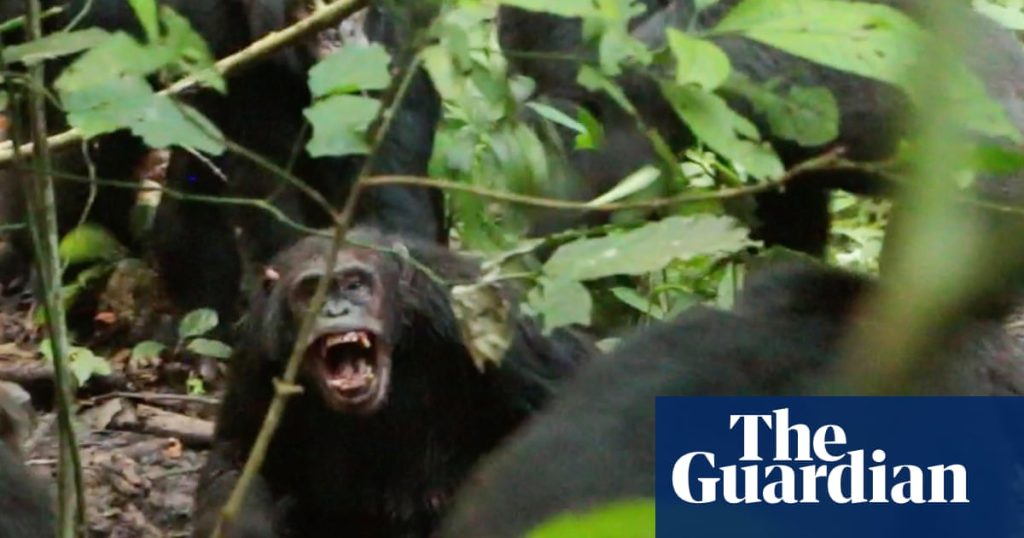
Researchers have documented an unprecedented phenomenon in the animal kingdom: a civil war between chimpanzees that were once part of the same unified community. This groundbreaking study, published in Science journal, reveals the first scientifically recorded instance of internal warfare within a wild chimpanzee population.
The Breaking Point
The conflict began to emerge in 2015 when primatologist Aaron Sandel observed unusual behavior among the Ngogo chimpanzee community in Uganda’s Kibale National Park. During his field observations, Sandel noticed that chimpanzees displayed anxious behaviors typically reserved for encounters with strangers, even when approaching their own group members.
This marked the beginning of what would evolve into a prolonged and violent division within what had previously been the world’s largest known wild chimpanzee community. The once-cohesive group, which had maintained social unity from at least 1995 through 2015, eventually split into two distinct factions: the western group and the central group.
Systematic Violence Emerges
Following the formal division by 2018, the western chimpanzee faction launched a campaign of coordinated attacks against their former community members. Over seven years, researchers documented 24 organized assaults that resulted in the deaths of at least seven adult males and 17 infants from the central group.
The systematic nature of these attacks represents behavior rarely observed in the animal kingdom, where shifting group loyalties and organized violence against former allies more closely resembles human conflict patterns than typical animal aggression.
Understanding the Causes
Scientists believe multiple factors contributed to the community’s fracture. A significant shift in the social hierarchy occurred when the group’s alpha male submitted to another chimpanzee in 2015. Additionally, the deaths of several key older individuals in preceding years weakened the social bonds that held different neighborhoods within the community together.
A disease outbreak in 2017 likely accelerated the inevitable split, creating conditions that made reconciliation impossible. These combined stressors created a perfect storm for the emergence of organized inter-group violence.
Evolutionary Implications
From an evolutionary perspective, the western group’s aggressive strategy appears to have been successful. The sustained attacks have resulted in the central group experiencing the lowest survival rates ever documented in a wild chimpanzee community, effectively reducing reproductive competition for the aggressors.
This behavior aligns with Darwinian fitness theory, where organisms can increase their genetic success not only through their own survival and reproduction but also by diminishing their competitors’ chances of survival and reproduction.
Conservation Concerns
The findings raise significant concerns for chimpanzee conservation efforts. Genetic evidence suggests such civil wars among chimpanzees naturally occur approximately once every 500 years. However, human activities including deforestation, climate change, and disease transmission could increase the frequency of these devastating internal conflicts.
Given that chimpanzees already face extinction threats, any factor that increases intra-species violence could further jeopardize their survival prospects. The research highlights how environmental disruptions can destabilize social structures that have evolved over millennia.
Parallels to Human Behavior
The study reveals striking similarities between chimpanzee and human social dynamics, particularly regarding how unified communities can rapidly transform into warring factions. The ability to cooperate extensively while simultaneously being capable of turning against former allies represents a troubling parallel to human civil conflicts.
Researchers note that such shifting group identities and the breakdown of social cohesion rarely occur in other animal species, making chimpanzees unique in their capacity for both cooperation and internecine warfare. This research provides valuable insights into the evolutionary roots of complex social behaviors that characterize both human and chimpanzee societies.