European Leaders Condemn New U.S. Tariff Policy as Trade Agreements Face Uncertainty
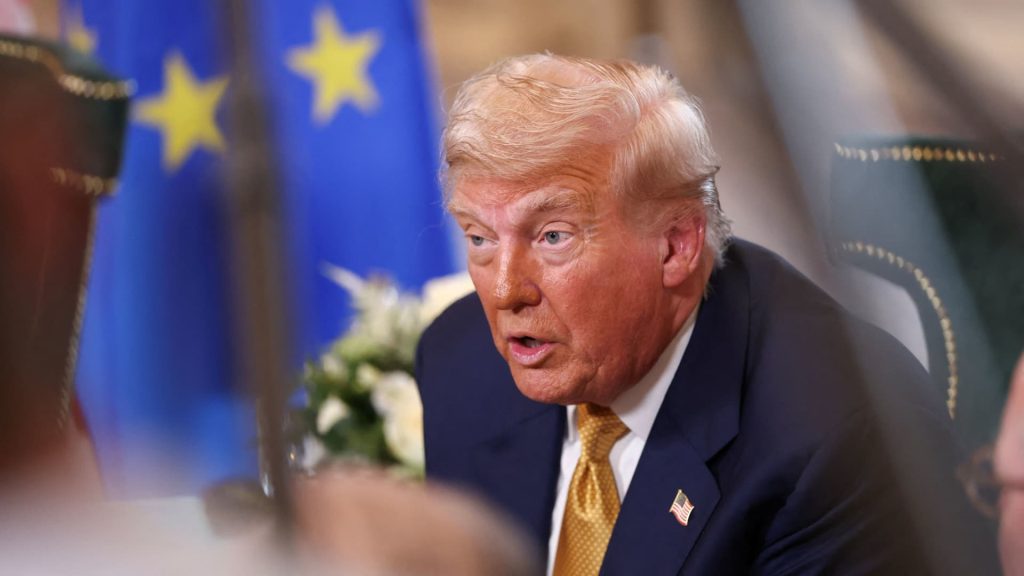
European officials have expressed strong opposition to President Donald Trump’s announcement of a comprehensive 15% tariff on all imports, raising concerns about the future of existing trade agreements between the United States and its European partners.
The tariff announcement followed the U.S. Supreme Court’s decision on Friday to invalidate Trump’s previous global tariff strategy that had been implemented earlier in the year. In response to this judicial ruling, Trump initially proposed a universal 10% import duty before escalating to the current 15% rate, which represents the maximum level permissible for 150 days without requiring Congressional authorization.
Trump declared the new import levies would take effect immediately through a post on his Truth Social platform over the weekend, utilizing an alternative legal mechanism to implement the trade measures.
European and British authorities have voiced significant concern over this latest development in international trade policy, questioning how the new tariff structure might affect bilateral trade agreements established with the United States in the previous year. These agreements had established a 15% duty on most European Union exports to America and a 10% levy on British goods.
Bernd Lange, who chairs the European Parliament’s International Trade Committee, characterized the situation as complete tariff disorder from the American administration. He emphasized on social media that the policy creates confusion and uncertainty for European Union members and other U.S. trading partners, questioning whether the new measures violate existing agreements.
The European Parliament’s trade committee has scheduled an emergency session for Monday to address Trump’s latest trade initiative. Lange indicated he would recommend suspending implementation of the U.S.-EU trade agreement until the bloc receives comprehensive legal analysis and firm commitments from Washington regarding the new tariff policy.
The European Commission released a statement emphasizing that agreements must be honored, noting that the EU maintains its commitments and expects the United States to do likewise. German Chancellor Friedrich Merz promised a unified European response before his scheduled White House visit in March, while deferring to Brussels for specific policy details.
French Trade Minister Nicolas Forissier suggested that European leaders should abandon any naive approach and present a coordinated response to Washington’s new trade stance, according to media reports.
British officials have also questioned how the new policy affects their trade arrangement with the United States, which had previously provided competitive advantages over European neighbors due to its lower baseline tariff rate. A UK government representative stated expectations that their preferential trading status would continue while working with the administration to understand the implications.
U.S. Trade Representative Jamieson Greer attempted to reassure international partners on Sunday, asserting that the president’s fundamental trade policy remains unchanged and that existing agreements remain valid. He emphasized ongoing discussions with partners and stated that no country has formally withdrawn from their agreements.
While current EU tariff rates technically remain at 15% under both the trade deal and new policy, the United Kingdom faces potential disadvantages if its negotiated 10% rate is not maintained. Trade analysis indicates the UK could see its average tariff rate increase by 2.1 percentage points, while the EU faces a 0.8 point rise.
Market analysts have noted that America’s closest allies appear most affected by what experts describe as trade policy chaos. European markets opened lower on Monday, reflecting investor concerns about the tariff uncertainty.
European Central Bank President Christine Lagarde warned that the transatlantic business relationship could suffer without clear trade guidelines, comparing the situation to driving without knowing traffic rules. She emphasized that disruptions to established trade equilibrium would inevitably cause business complications.